
Baby Wearing: why we (humans) do it and why it matters.
I still remember my mother in law fishing out her old ‘obi’ (this is what a baby carrier is referred to as in Japan). A simple length of fabric, sewn in a specific way, with straps that were intricately tied to bond baby to the wearers body. It’s versatility allows for baby to travel on mama’s back or on her chest. This modest piece of fabric is at least 40 years old, has travelled half way across the world and been used by multiple family members. To this day it remains my favourite carrier, more than any of the expensive ones I received as gifts with all the cumbersome bells and whistles.
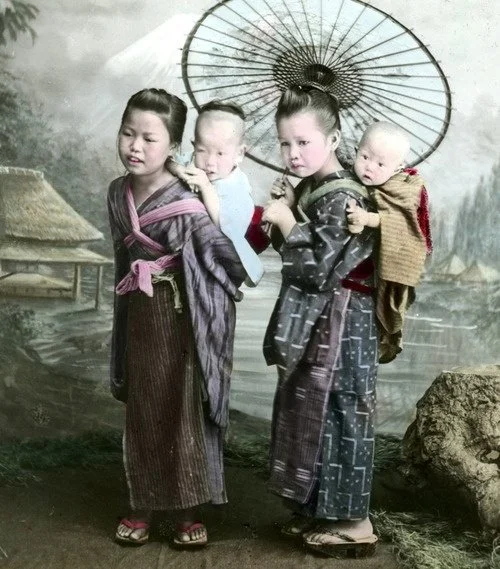
Babywearing, a practice as old as the human race itself, and one that non Western societies, out of every day necessity and ease of functionality, never really stopped practicing. But in modern Western society (relatively speaking within the last 100 years), it has only recently gained popularity and become widely accepted.
Biologically, humans evolved very early on to carry their young and keep them close when looking for food (as apposed to say an animal such as a wolf who will leave their young to hunt and bring food back.)
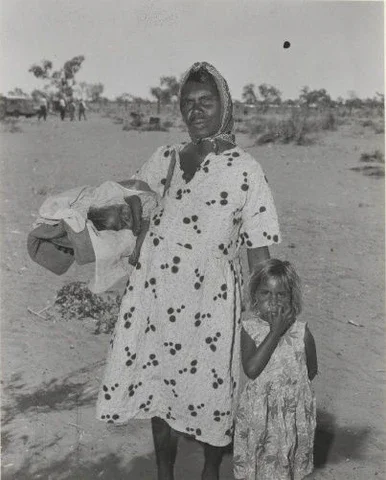
Northern Territory, Australia 1958. [picture] / W. Pedersen
Due to a newborns inability to cling to it’s mother like other “carrying” species, early humans developed baby carrying devices using materials such as animal hide and plant fibres. This development allowed parents and carers to keep baby close while remaining mobile in order to fulfill everyday tasks essential to survival.
Visual records show baby wearing across civilizations throughout history including ancient Egypt and medieval Europe. It was not until the Victorian era (1800’s) that baby wearing declined due to changing parenting beliefs… that infants should learn to be independent beings separate from their mothers. This lead to the popularity of wheeled carriages over baby carriers, which would quickly come to be linked only with non-Western cultures and the lower class.
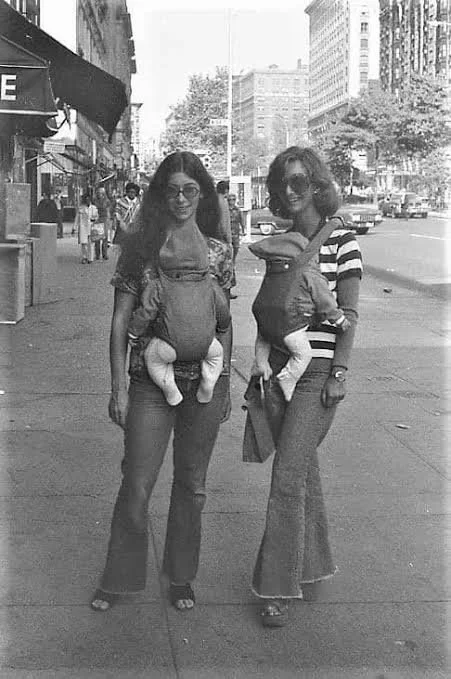
Photograph by Morris Huberland
Interest in baby wearing was not once again sparked until the 1970’s, and it has only been in recent years that it has moved beyond niche parenting movements. Studies indicate that infants who are carried regularly tend to cry less and appear calmer. It cannot be denied that baby wearing strengthens emotional bonds between caregiver and infant.